Friday, May 1, 2015

April Books

A mixed bag this month, but Ayaan Hirsi Ali's story and Lester Bangs' writing were both welcome discoveries. The former is my favourite book so far this year.

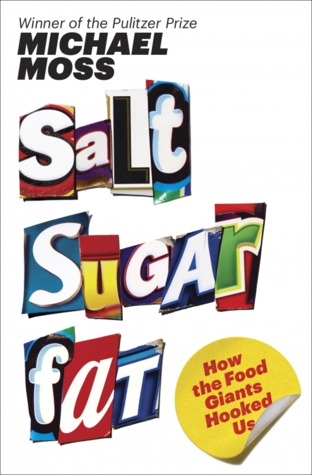
Salt Sugar Fat: How the Food Giants Hooked UsSalt Sugar Fat: How the Food Giants Hooked Us

From a Pulitzer Prize–winning investigative reporter at The New York Times comes the explosive story of the rise of the processed food industry and its link to the emerging obesity epidemic. Michael Moss reveals how companies use salt, sugar, and fat to addict us and, more important, how we can fight back.
Note
Interesting look at the manipulation of food to make it taste better. The seedy underbelly of capitalism. Nothing startling.

A Girl Is a Half-formed ThingA Girl Is a Half-formed Thing

Eimear McBride's debut tells, with astonishing insight and in brutal detail, the story of a young woman's relationship with her brother, and the long shadow cast by his childhood brain tumour. Not so much a stream of consciousness, as an unconscious railing against a life that makes little sense, and a shocking and intimate insight into the thoughts, feelings and chaotic sexuality of a vulnerable and isolated protagonist, to read A Girl Is A Half-Formed Thing is to plunge inside its narrator's head, experiencing her world first-hand. This isn't always comfortable - but it is always a revelation.

Touching on everything from family violence to sexuality and the personal struggle to remain intact in times of intense trauma, McBride writes with singular intensity, acute sensitivity and mordant wit. A Girl is a Half-formed Thing is moving, funny – and alarming. It is a book you will never forget.
 
Note
Picked this up at the library on a whim. That was a mistake. Nasty and hard to read, at least for me.

Infidel


Infidel

In this profoundly affecting memoir from the internationally renowned author of "The Caged Virgin, " Ayaan Hirsi Ali tells her astonishing life story, from her traditional Muslim childhood in Somalia, Saudi Arabia, and Kenya, to her intellectual awakening and activism in the Netherlands, and her current life under armed guard in the West. One of today's most admired and controversial political figures, Ayaan Hirsi Ali burst into international headlines following an Islamist's murder of her colleague, Theo van Gogh, with whom she made the movie "Submission."

"Infidel" is the eagerly awaited story of the coming of age of this elegant, distinguished -- and sometimes reviled -- political superstar and champion of free speech. With a gimlet eye and measured, often ironic, voice, Hirsi Ali recounts the evolution of her beliefs, her ironclad will, and her extraordinary resolve to fight injustice done in the name of religion. Raised in a strict Muslim family and extended clan, Hirsi Ali survived civil war, female mutilation, brutal beatings, adolescence as a devout believer during the rise of the Muslim Brotherhood, and life in four troubled, unstable countries largely ruled by despots. In her early twenties, she escaped from a forced marriage and sought asylum in the Netherlands, where she earned a college degree in political science, tried to help her tragically depressed sister adjust to the West, and fought for the rights of Muslim immigrant women and the reform of Islam as a member of Parliament. Even though she is under constant threat -- demonized by reactionary Islamists and politicians, disowned by her father, and expelled from her family and clan -- she refuses to be silenced.

Ultimately a celebration of triumph over adversity, Hirsi Ali's story tells how a bright little girl evolved out of dutiful obedience to become an outspoken, pioneering freedom fighter. As Western governments struggle to balance democratic ideals with religious pressures, no story could be timelier or more significant.
 
Note
Remarkable story, including a good look at the mistreatment of women by Islamic society. Everyone should read this book.


Main Lines, Blood Feasts, and Bad Taste: A Lester Bangs ReaderMain Lines, Blood Feasts, and Bad Taste: A Lester Bangs Reader

by 
Blank 133x176

Friday, April 3, 2015

No Static at All

I've finally gotten my audio consumption delivery capability to a place where I'm pretty much content/ The ACDC is driven by two competing desires: to have everything work perfectly; and to spend as little as possible. And it has to cover a number of scenarios: at home; walking the dog; working out; and in the car.

I came home with the following set up:

  • music and podcasts managed on computer and played at home through a sound dock connected by cable to a computer;
  • Bluetooth sound dock in the living room (birthday present for the OG, not part of my ACDC);
  • Ipod shuffle for the gym and other out-of-the-house activity (wireless headphones broken and discontinued by the manufacurer;
  • car radio, with occasional iphone connected via cable.

The biggest catalyst for change was Spotify. The Gs love it, and though I installed it years ago, I've never really used it. But when they announced last year that a family plan was available for the premium model (unlimited skips, available offline), I decided to give it a try, and it was part of a birthday present for the BG in November, although we didn't get it up and running until the following month.

I installed it on my computer, and it quickly and efficiently indexed the music in my ITunes library. After a few hiccups in syncing the files on my phone and tablet (it kept wanting to store files locally, filling up my phone with files from my computer), I learned via the Internet, that if I mirrored my ITunes library in Spotify's "Songs" folder, I  would have a link to my universe of music, and could shuffle through my collection, using either my phone or tablet to skip a song that I don't want to hear.
Mine are black

So now when I'm cooking dinner, I take the phone and the dock into the kitchen, connect them via bluetooth and shuffle through everything from Afrika Bambataa to Warren Zevon. I love how songs that I haven't thought of in years pop up and remind me who I was in the 80s and 90s.

When it's time to walk the dog, I do the same thing, except that I have a $30 pair of bluetooth headphones that I pair with my phone, In the morning, it's two plays of the news on Radio France, and in the evening, the LeDuc shuffle.

About the same size as the shuffle
When it's time to go to the gym, I load up the WeFunk podcast on my shuffle, and I've purchased a $20 transmitter that sends the audio to the bluetooth headphones. This means that I can either clip the shuffle to my shorts, or put it in one of the cubbyholes while I work out. The range is about thirty feet, so if I were to, ahem, when, I forget it, I get an "out of range" message from the headphones. If I'm walking to and from the gym (usually on Saturdays) I'll switch to talk, usually Bill Simmons (if it's basketball or an interesting guest), Econtalk or the Ted talks.

The Original iMagnet Cradle-less Universal Car Phone Mount HolderIn the car, I have a magnetic dock for the phone, and I'll connect it to the AUX jack on the radio with a cable that stays in the car, and plug it into the cigarette lighter for long trips. I'll either shuffle through my own music or I've been experimenting with Artist radio, which so far, seems better than Pandora, which I tried and ditched a couple of years ago. So far, it has worked great, and I can run the music and the GPS simultaneously. It still kind of eerie when the music suddenly stops and the phone tells me to get ready for a turn. But in a "whoa" kind or way.

My only complaint is that this ACDC does not expose me to a lot of new music. The Gs monopolize the radio when I'm chauffeuring them to one of their many activities, but their taste is a little poppy, and I'm just not feeling the constant cycling through Maroon 5 and the like. Occasionally we'll find a song we like (the new Ed Sheeran for example), but I can only listen to it 4-5 times over the course of thirty minutes before I'm a little tired of it. But the OG has done some digging in the crates, and her tastes are maturing (though they are also countrifying), so perhaps there is some hope that she can play the "tastemaker" role filled by various cool friends with large record collections over the years.

It's interesting to compare this ACDC to the walkman, mix tape, mtv world of yore, and I look forward to telling my grandchildren about the old days, when I needed to pair devices before they would work together; when wireless range was only thirty feet; and the cloud thought that George Benson belonged on a radio station inspired by the Fatback band. This may help me remember.

Wednesday, April 1, 2015

March Books


Full list for 2015 is here. This month was nicely balanced, with hints of technology, travel and history. Disappointed by fiction.

Killing Yourself to Live: 85% of a True Story
Building on the national bestselling success of Sex, Drugs, and Cocoa Puffs, preeminent pop culture writer Chuck Klosterman unleashes his best book yet—the story of his cross-country tour of sites where rock stars have died and his search for love, excitement, and the meaning of death.

For 6,557 miles, Chuck Klosterman thought about dying. He drove a rental car from New York to Rhode Island to Georgia to Mississippi to Iowa to Minneapolis to Fargo to Seattle, and he chased death and rock ‘n’ roll all the way. Within the span of twenty-one days, Chuck had three relationships end—one by choice, one by chance, and one by exhaustion. He snorted cocaine in a graveyard. He walked a half-mile through a bean field. A man in Dickinson, North Dakota, explained to him why we have fewer windmills than we used to. He listened to the KISS solo albums and the Rod Stewart box set. At one point, poisonous snakes became involved. The road is hard. From the Chelsea Hotel to the swampland where Lynyrd Skynyrd’s plane went down to the site where Kurt Cobain blew his head off, Chuck explored every brand of rock star demise. He wanted to know why the greatest career move any musician can make is to stop breathing...and what this means for the rest of us.
A little disjointed and not about what it purports to be about, but I'm pretty certain he could write about anything and I'd love it. His encyclopedic knowledge of the collective (and solo) oeuvre of Kiss is really something.
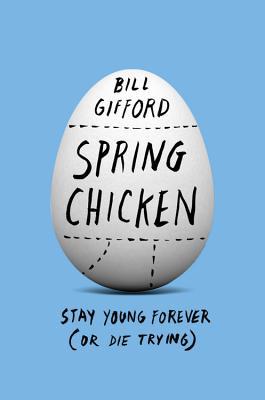
Spring Chicken: Stay Young Forever (or Die Trying)

Spring Chicken: Stay Young Forever (or Die Trying)

SPRING CHICKEN is a full-throttle, high-energy ride through the latest research, popular mythology, and ancient wisdom on mankind's oldest obsession: How can we live longer? And better? In his funny, self-deprecating voice, veteran reporter Bill Gifford takes readers on a fascinating journey through the science of aging, from the obvious signs like wrinkles and baldness right down into the innermost workings of cells. We visit cutting-edge labs where scientists are working to "hack" the aging process, like purging "senescent" cells from mice to reverse the effects of aging. He'll reveal why some people live past 100 without even trying, what has happened with resveratrol, the "red wine pill" that made headlines a few years ago, how your fat tissue is trying to kill you, and how it's possible to unlock longevity-promoting pathways that are programmed into our very genes. Gifford separates the wheat from the chaff as he exposes hoaxes and scams foisted upon an aging society, and arms readers with the best possible advice on what to do, what not to do, and what life-changing treatments may be right around the corner. 

An intoxicating mixture of deep reporting, fascinating science, and prescriptive takeaway, SPRING CHICKEN will reveal the extraordinary breakthroughs that may yet bring us eternal youth, while exposing dangerous deceptions that prey on the innocent and ignorant.
Enjoyable and well-researched review of the "anti-aging" market and what you can do (and buy) to stay young and avoid dementia.

Cathedral, Forge, and Waterwheel: Technology and Invention in the Middle AgesCathedral, Forge, and Waterwheel: Technology and Invention in the Middle Ages

Recommended by Pat.

How We Got to Now: Six Innovations That Made the Modern World

How We Got to Now: Six Innovations That Made the Modern World

From the New York Times–bestselling author of Where Good Ideas Come From and Everything Bad Is Good for You, a new look at the power and legacy of great ideas.In this illustrated history, Steven Johnson explores the history of innovation over centuries, tracing facets of modern life (refrigeration, clocks, and eyeglass lenses, to name a few) from their creation by hobbyists, amateurs, and entrepreneurs to their unintended historical consequences. Filled with surprising stories of accidental genius and brilliant mistakes—from the French publisher who invented the phonograph before Edison but forgot to include playback, to the Hollywood movie star who helped invent the technology behind Wi-Fi and Bluetooth—How We Got to Now investigates the secret history behind the everyday objects of contemporary life.
 
In his trademark style, Johnson examines unexpected connections between seemingly unrelated fields: how the invention of air-conditioning enabled the largest migration of human beings in the history of the species—to cities such as Dubai or Phoenix, which would otherwise be virtually uninhabitable; how pendulum clocks helped trigger the industrial revolution; and how clean water made it possible to manufacture computer chips. Accompanied by a major six-part television series on PBS, How We Got to Now is the story of collaborative networks building the modern world, written in the provocative, informative, and engaging style that has earned Johnson fans around the globe.
Really enjoyed this, but I'm a sucker for this kind of stuff. Is air conditioning as important to society as agriculture? Maybe not, but it's a legitimate question.

The Complete Stories of Truman CapoteThe Complete Stories of Truman Capote

by 

Monday, March 2, 2015

February Books

Pretty good month. 800 pages of Balkan history took awhile though.

Bad Samaritans: The Myth of Free Trade and the Secret History of CapitalismBad Samaritans: The Myth of Free Trade and the Secret History of Capitalism

A rising young star in the field of economics attacks the free-trade orthodoxy of The World Is Flat head-on—a crisp, contrarian history of global capitalism.

One economist has called Ha-Joon Chang “the most exciting thinker our profession has turned out in the past fifteen years.” With Bad Samaritans, this provocative scholar bursts into the debate on globalization and economic justice. Using irreverent wit, an engagingly personal style, and a battery of examples, Chang blasts holes in the “World Is Flat” orthodoxy of Thomas Friedman and other liberal economists who argue that only unfettered capitalism and wide-open international trade can lift struggling nations out of poverty. On the contrary, Chang shows, today’s economic superpowers—from the U.S. to Britain to his native Korea—all attained prosperity by shameless protectionism and government intervention in industry. We have conveniently forgotten this fact, telling ourselves a fairy tale about the magic of free trade and—via our proxies such as the World Bank, International Monetary Fund, and World Trade Organization—ramming policies that suit ourselves down the throat of the developing world.

Unlike typical economists who construct models of how the marketplaceshould work, Chang examines the past: what has actually happened. His pungently contrarian history demolishes one pillar after another of free-market mythology. We treat patents and copyrights as sacrosanct—but developed our own industries by studiously copying others’ technologies. We insist that centrally planned economies stifle growth—but many developing countries had higher GDP growth before they were pressured into deregulating their economies. Both justice and common sense, Chang argues, demand that we reevaluate the policies we force on nations that are struggling to follow in our footsteps.
 
Note
Data-driven look about how protectionism and subsidy spurred the rise of the nations that now preach the gospel of free trade. Challenged some of my fundamental views about the world in a way that definitely made me think.

The Hard Thing About Hard Things: Building a Business When There Are No Easy AnswersThe Hard Thing About Hard Things: Building a Business When There Are No Easy Answers

Monday, February 2, 2015

January Books

Thanks to Pat for the recommendation (ATKM) and Scott for the gift (What if?)

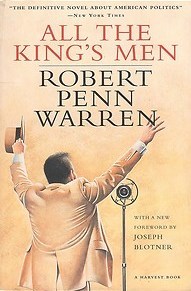
All the King's MenAll the King's Men

More than just a classic political novel, Warren’s tale of power and corruption in the Depression-era South is a sustained meditation on the unforeseen consequences of every human act, the vexing connectedness of all people and the possibility—it’s not much of one—of goodness in a sinful world. Willie Stark, Warren’s lightly disguised version of Huey Long, the onetime Louisiana strongman/governor, begins as a genuine tribune of the people and ends as a murderous populist demagogue. Jack Burden is his press agent, who carries out the boss’s orders, first without objection, then in the face of his own increasingly troubled conscience. And the politics? For Warren, that’s simply the arena most likely to prove that man is a fallen creature. Which it does.
Note
Masterful writing of a great story. Belongs in the pantheon of modern american literature. Cinematic in scope, with a host of colorful and complex characters. Best book I've read in some time.

Afternoon Men

Afternoon Men

"Afternoon Men" follows the trivial encounters and idle pastimes of the social set through William Atwater. With a glee in upending pretense that rivals the works of Max Beerbohm and Evelyn Waugh, Powell attacks artistic pretension, aristocratic jadedness, and the dark side of the "glamorous" life."Afternoon Men" provides an important perspective on the development of one of this century's great satirists.
Note
Sort of a cross between The Importance of Being Earnest and Waiting for Godot. Clever at times, but not often, and the satire seemed overdone.

What If?: Serious Scientific Answers to Absurd Hypothetical Questions


What If?: Serious Scientific Answers to Absurd Hypothetical Questions

Randall Munroe left NASA in 2005 to start up his hugely popular site XKCD 'a web comic of romance, sarcasm, math and language' which offers a witty take on the world of science and geeks. It's had over a billion page hits to date. A year ago Munroe set up a new section - What If - where he tackles a series of impossible questions: If your cells suddenly lost the power to divide, how long would you survive? How dangerous is it, really, in a pool in a thunderstorm? If we hooked turbines to people exercising in gyms, how much power could we produce? What if everyone only had one soulmate? From what height would you need to drop a steak to ensure it was cooked by the time it reached the ground? What would happen if the moon went away? This book gathers together the best entries along with lots of new gems. From The Lord of the Rings, Star Trek and the songs of Tim Minchin, through chemistry, geography and physics, Munroe leaves no stone unturned in his quest for knowledge. And his answers are witty and memorable and studded with hilarious cartoons and infographics. Far more than a book for geeks, WHAT IF explains the laws of science in operation in a way that every intelligent reader will enjoy and feel the smarter for having read.
Note
Very fun to read. There is no shortage of weirdness at the edge of science.

How to Build a Girl


How to Build a Girl

What do you do in your teenage years when you realize what your parents taught you wasn't enough? You must go out and find books and poetry and pop songs and bad heroes—and build yourself.

It's 1990. Johanna Morrigan, fourteen, has shamed herself so badly on local TV that she decides that there's no point in being Johanna anymore and reinvents herself as Dolly Wilde—fast-talking, hard-drinking gothic hero and full-time Lady Sex Adventurer. She will save her poverty-stricken Bohemian family by becoming a writer—like Jo in Little Women, or the Brontës—but without the dying-young bit.

By sixteen, she's smoking cigarettes, getting drunk, and working for a music paper. She's writing pornographic letters to rock stars, having all the kinds of sex with all the kinds of men, and eviscerating bands in reviews of 600 words or less.

But what happens when Johanna realizes she's built Dolly with a fatal flaw? Is a box full of records, a wall full of posters, and a head full of paperbacks enough to build a girl after all?

Imagine The Bell Jar—written by Rizzo from GreaseHow to Build a Girlis a funny, poignant, and heartbreakingly evocative story of self-discovery and invention, as only Caitlin Moran could tell it.
 
Note
Picked this up off the "new and recommended" shelf at the library, hoping for insight into my teenage daughters. Got a cross between Bridget Jones and Matilda instead. Never boring, but a little awkward and vulgar at times.


The Great Game: The Struggle for Empire in Central Asia (Kodansha Globe)The Great Game: The Struggle for Empire in Central Asia 

Hopkirk's spellbinding account of the great imperial struggle for supremacy in Central Asia has been hailed as essential reading with that era's legacy playing itself out today. The Great Game between Victorian Britain & Tsarist Russia was fought across desolate terrain from the Caucasus to China, over the lonely passes of the Parmirs & Karakorams, in the blazing Kerman & Helmund deserts, & thru the caravan towns of the old Silk Road-both powers scrambling to control access to the riches of India & the East. When play first began, the frontiers of Russia & British India lay 2000 miles apart; by the end, this distance had shrunk to 20 miles at some points. Now, in the vacuum left by the disintegration of the USSR, there's once again talk of Russian soldiers "dipping their toes in the Indian Ocean."
The Washington Post has said that "every story Peter Hopkirk touches is totally engrossing." In this gripping narrative he recounts a breathtaking tale of espionage & treachery thru the actual experiences of its colorful characters. Based on meticulous scholarship & on-the-spot research, this is the history at the core of today's geopolitics.
Note
Sweeping history of a time and region I knew next to nothing about. A little sprawling and matter-of-fact at times. but the personalities, especially the British gentlemen playing at espionage, were captivating.

Monday, January 12, 2015

2014 Books

Lots of free time in Serbia afforded plenty of opportunities for reading. I also dipped into Justified, Mad Men, Breaking Bad, Silicon Valley, Broad City and Game of Thrones on television. Of these, I think I enjoyed Silicon Valley the most, but it is fully my intention to damn it with faint praise. I had a number of problems with Breaking Bad, and, of the above list, found it to be the most disappointing; but that might have been the result of high expectations, along with the fact that it's really not my kind of show.

Channeling   Chris Rock, I'll list my top five, followed by the whole list, which is also available on Goodreads. Hat Tip to Pat (my only Goodreads friend at this point) for his reviews and suggestions; and also to Lois, Sarah, Worldwide and Monika for their gifts and suggestions.

Confessions of an Advertising ManConfessions of an Advertising Man
Conspiracy Theories and Other Dangerous Ideas
Junkyard Planet: Travels in the Billion-Dollar Trash Trade