Tuesday, September 30, 2014

September Books


Not a bad month, but I had much higher hopes for several of these. Only the Grimes exceeded expectations, and it is a pretty frothy concoction.

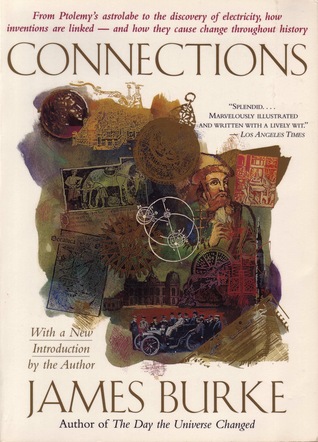
Connections

ConnectionsIn this bestselling book, James Burke examines the ideas, inventions, and coincidences that have culminated in the major technological advances of today. He untangles the pattern of interconnecting events, the accidents of time, circumstance, and place that gave rise to major inventions of the world. Says Burke, "My purpose is to acquaint the reader with some of the forces that have caused change in the past, looking in particular at eight innovations - the computer, the production line, telecommunications, the airplane, the atomic bomb, plastics, the guided rocket, and television - which may be most influential in structuring our own futures.... Each one of these is part of a family of similar devices, and is the result of a sequence of closely connected events extending from the ancient world until the present day. Each has enormous potential for humankind's benefit - or destruction."
Note:
Easy to read look at how discoveries and accidents have an incredible impact on progress. The adjacent possible is an incredibly powerful force for progress.

Straight Up or On the Rocks: The Story of the American Cocktail

Straight Up or On the Rocks: The Story of the American CocktailThe cocktail is as old as the nation that invented it, yet until this entertaining and authoritative account, its story had never been fully told. William Grimes traces the evolution of American drink from the anything-goes concoctions of the Colonial era to the frozen margarita, spiking his meticulously researched narrative with arresting details, odd facts, and colorful figures. 

The book includes about one hundred recipes--half of them new for this edition--for both classics and innovations.

Note:
Slim look at drinking in America and the evolution of the cocktail before and after Prohibition. A pleasure to read.

The Invention of the Modern World

Blank-133x176From the preface: 'This is a book which synthesizes a lifetime of reflection on the origins of the modern world. Through forty years of travel in Europe, Australia, India, Nepal, Japan and China I have observed the similarities and differences of cultures. I have read as widely as possible in both contemporary and classical works in history, anthropology and philosophy.'

Prof Macfarlane is also the author of The Culture of Capitalism, The Savage Wars of Peace, The Riddle of the Modern World and The Making of the Modern World, among many others.
Note:
Like listening to a brilliant Oxford professor go on at a dinner party. Enjoyable, but an editor might have helped.

Monkey Business: The Lives and Legends of The Marx Brothers

Monkey Business: The Lives and Legends of The Marx BrothersStrange but true: this is the first authentic account of the Marx Brothers, their origins and of the roots of their comedy.

First and foremost, this is the saga of a family whose theatrical roots stretch back to mid-19th century Germany. From Groucho Marx's first warblings with the singing Leroy Trio, this book brings to life the vanished world of America's wild and boisterous variety circuits, leading to the Marx Brothers' Broadway successes, and their alliance with New York's theatrical lions, George S. Kaufman and the 'Algonquin Round Table'.

Never-before-published scripts, well-minted Marxian dialogue, and much madness and mayhem feature in this tale of the Brothers' battles with Hollywood, their films, their loves and marriages, and the story of the forgotten brother Gummo.
Note:
Disappointing. Didn't learn much, except that they were Vaudeville veterans who gained success on the silver screen. Chico like to gamble. Not recommended


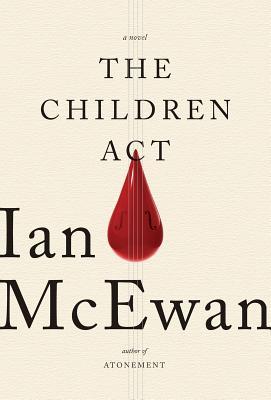
The Children Act


The Children ActFiona Maye is a High Court judge in London presiding over cases in family court. She is fiercely intelligent, well respected, and deeply immersed in the nuances of her particular field of law. Often the outcome of a case seems simple from the outside, the course of action to ensure a child's welfare obvious. But the law requires more rigor than mere pragmatism, and Fiona is expert in considering the sensitivities of culture and religion when handing down her verdicts.

But Fiona's professional success belies domestic strife. Her husband, Jack, asks her to consider an open marriage and, after an argument, moves out of their house. His departure leaves her adrift, wondering whether it was not love she had lost so much as a modern form of respectability; whether it was not contempt and ostracism she really fears. She decides to throw herself into her work, especially a complex case involving a seventeen-year-old boy whose parents will not permit a lifesaving blood transfusion because it conflicts with their beliefs as Jehovah's Witnesses. But Jack doesn't leave her thoughts, and the pressure to resolve the case—as well as her crumbling marriage—tests Fiona in ways that will keep readers thoroughly enthralled until the last stunning page.
Note:
Interesting take on aging, law and religion. Succinct, but I was expecting more.

Saturday, September 6, 2014

Five Books

Cousin Meg calls me out on Facebook to respond to the "10 books that most influenced you" exercise that is all over Facebook. This is a challenge in many ways, partly because it carries the scent of self promotion, but mostly because it's hard to recommend titles about which your attitude has changed. I loved Franny and Zooey when I read it in 1986, but was not nearly as wild about it 25 years later. Same with the Chronicles of Narnia when I reread them with the OG in 2005. What does that mean? Has their influence on me lessened somehow? Am I embarrassed to recommend books that. in retrospect, don't seem to deserve the love I once gave them? It's hard to answer this question honestly.

The only books I can agree on are not really books at all: The Joy of Cooking, which I've blogged about before; and Four Quartets, which I also loved in 1986, used extensively in the vows for our wedding ceremony, and keep a First Edition of--a gift from three dear law school friends--on my desk at home. One line from East Coker--"For us there is only the trying. The rest is not our business." comes closer than anything (except possibly "Be excellent to each other.") at capturing how I feel about life, the universe and everything.

There is an epigram that a book is a picture of who you were when you read it. With that in mind (and inspired by the excellent 5 books site, which along with Farnam Street, are two sites I check frequently for recommendations), I thought I would list 5 books I've read in the last five years that have markedly increased my understanding of the world and the people in it. I'll get the total number of books mentioned to 10 by mentioning that the Road to Wigan Pier almost made the list, but didn't quite belong in the set:


  1. Daniel Kahneman, Thinking, Fast and Slow;
  2. Dan Ariely, Predictably Irrational;
  3. Nassim Taleb, Fooled by Randomness;
  4. Jared Diamond, Guns, Germs and Steel;
  5. Tim Harford, The Undercover Economist.

I'm not going to call anyone out on this, but I do enjoy seeing the lists. I used to claim that the best way to assess a person was by looking at their music collection. That doesn't work so well in the age of Pandora, Spotify and Itunes, so I'll have to look for other heuristics, and this seems like a viable candidate

Monday, September 1, 2014

August Books

Thought I'd get more done this month, with three weeks of holidays and two transatlantic trips, but I spent too much time riding this and then endlessly reliving the "best day ever" with the BG. No regrets.

Love Goes to Buildings on Fire: Five Years in New York That Changed Music Forever

Love Goes to Buildings on Fire: Five Years in New York That Changed Music Forever
Punk rock and hip-hop. Disco and salsa. The loft jazz scene and the downtown composers known as Minimalists. In the mid-1970s, New York City was a laboratory where all the major styles of modern music were reinvented—all at once, from one block to the next, by musicians who knew, admired, and borrowed from one another. Crime was everywhere, the government was broke, and the city’s infrastructure was collapsing. But rent was cheap, and the possibilities for musical exploration were limitless.
Love Goes to Buildings on Fire is the first book to tell the full story of the era’s music scenes and the phenomenal and surprising ways they intersected. From New Year’s Day 1973 to New Year’s Eve 1977, the book moves panoramically from post-Dylan Greenwich Village, to the arson-scarred South Bronx barrios where salsa and hip-hop were created, to the Lower Manhattan lofts where jazz and classical music were reimagined, to ramshackle clubs like CBGBs and The Gallery, where rock and dance music were hot-wired for a new generation. As they remade the music, the musicians at the center of the book invented themselves: Willie Colón and the Fania All-Stars renting Yankee Stadium to take salsa to the masses, New Jersey locals Bruce Springsteen and Patti Smith claiming the jungleland of Manhattan as their own, Grandmaster Flash transforming the turntable into a musical instrument, David Byrne and Talking Heads proving that rock music “ain’t no foolin’ around.” Will Hermes was there—venturing from his native Queens to the small dark rooms where the revolution was taking place—and in Love Goes to Buildings on Fire he captures the creativity, drive, and full-out lust for life of the great New York musicians of those years, who knew that the music they were making would change the world.  

The Balkans: Nationalism, War and the Great Powers 1804-1999

The Balkans: Nationalism, War and the Great Powers 1804-1999This unique and lively history of Balkan geopolitics since the early nineteenth century gives readers the essential historical background to recent events in this war-torn area. No other book covers the entire region, or offers such profound insights into the roots of Balkan violence, or explains so vividly the origins of modern Serbia, Croatia, Bosnia, Greece, Bulgaria, Romania, and Albania. Misha Glenny presents a lucid and fair-minded account of each national group in the Balkans and its struggle for statehood. The narrative is studded with sharply observed portraits of kings, guerrillas, bandits, generals, and politicians. Glenny also explores the often-catastrophic relationship between the Balkans and the Great Powers, raising some disturbing questions about Western intervention.

Smuggler Nation: How Illicit Trade Made America

Smuggler Nation: How Illicit Trade Made AmericaAmerica is a smuggler nation. Our long history of illicit imports has ranged from West Indies molasses and Dutch gunpowder in the 18th century, to British industrial technologies and African slaves in the 19th century, to French condoms and Canadian booze in the early 20th century, to Mexican workers and Colombian cocaine in the modern era. Contraband capitalism, it turns out, has been an integral part of American capitalism. Providing a sweeping narrative history from colonial times to the present, Smuggler Nation is the first book to retell the story of America--and of its engagement with its neighbors and the rest of the world--as a series of highly contentious battles over clandestine commerce. As Peter Andreas demonstrates in this provocative and fascinating account, smuggling has played a pivotal and too often overlooked role in America's birth, westward expansion, and economic development, while anti-smuggling campaigns have dramatically enhanced the federal government's policing powers. The great irony, Andreas tells us, is that a country that was born and grew up through smuggling is today the world's leading anti-smuggling crusader.
In tracing America's long and often tortuous relationship with the murky underworld of smuggling, Andreas provides a much-needed antidote to today's hyperbolic depictions of out-of-control borders and growing global crime threats. Urgent calls by politicians and pundits to regain control of the nation's borders suffer from a severe case of historical amnesia, nostalgically implying that they were ever actually under control. This is pure mythology, says Andreas. For better and for worse, America's borders have always been highly porous.
Far from being a new and unprecedented danger to America, the illicit underside of globalization is actually an old American tradition. As Andreas shows, it goes back not just decades but centuries. And its impact has been decidedly double-edged, not only subverting U.S. laws but also helping to fuel America's evolution from a remote British colony to the world's pre-eminent superpower.

Crimes Against Logic: Exposing the Bogus Arguments of Politicians, Priests, Journalists, and Other Serial Offenders

Crimes Against Logic: Exposing the Bogus Arguments of Politicians, Priests, Journalists, and Other Serial OffendersUncover the truth under all the BS
In the daily battle for our hearts and minds--not to mention our hard-earned cash--the truth is usually the first casualty. It's time we learned how to see through the rhetoric, faulty reasoning, and misinformation that we're subjected to from morning to night by talk-radio hosts, op-ed columnists, advertisers, self-help gurus, business "thinkers," and, of course, politicians. And no one is better equipped to show us how than award-winning philosopher Jamie Whyte.

In "Crimes Against Logic" Whyte take us on a fast-paced, ruthlessly funny romp through the mulligan stew of can, folderol, and bogus logic served up in the media, at the office, and even in your own home. Applying his laserlike wit to dozens of timely examples, Whyte cuts through the haze of facts, figures, and double-talk and gets at the real truth behind what they're telling us.

Wednesday, August 6, 2014

Turning spam into partridge

I have pretty much stopped blogging. Belgrade grew familiar, and the response was a little underwhelming. I didn't develop into the giant internet celebrity that I had envisioned in the project plan. I'm kidding (sort of), but I'll blame timing: the concept of BigD had the Dad conceit as one of the main drivers, but by the time I started, my girls weren't little anymore and there were decidedly fewer of those "kids-say-the-darndest-things" moments for source material. Or maybe there are just fewer things worth writing about that happen every day then we imagine.  Who knows? Perhaps I'm not as interesting as I think I am.

Anyway, moving on. I think I'll still post my book reviews here, and maybe the odd story or anecdote, which is why I'm writing today. There's a story worth preserving.

Facebook friends may recall a situation in May when a friend-of-a-friend's daughter, who had arrived for a summer job at Cedar Point--the bodacious amusement park in Ohio that my high school used to visit every year--found herself stranded at a motel on the highway, when the park wasn't ready for her as planned.

At first I thought it was spam, and started to move on. But then I looked again, and I thought that someone in the area might be willing to help; sure enough, Young Jeezy contacted a colleague at the Sandusky Public Library, who took Ivona to a grocery store, and has become, over the course of the summer, a friend and mentor. Good stuff. End of story.

Not quite.

I finally met her parents last week, when my colleague and his wife took me out for a thank-you-dinner. Her mother, a former English teacher, has worked for the European Union for 20 years, and her father, a chef, has held a number of jobs. We were up on one of the hills, at Belgrade's only ski slope and I was remarking on how rustic the vibe was, even though we were only ten minutes from downtown. "Oh yes," Sveta told me. "I hunt partridge only 2 kilometers away."

As another Niksicko draft arrived, I peppered him with questions about hunting and cooking game birds. He has a brittany spaniel to help and he likes to make soup and to cut up the birds before cooking them.

As we were saying goodbye, he told me that he was going hunting this weekend and would have me over for a partridge dinner. "Of course," I said, shaking his hand and basking in the glow of a nice dinner.

I didn't think any more of it, until Monday, when Srdjan asked me if I was free for dinner at Tanja and Sveta's tomorrow night. "Sure," I said, a little nervously, remembering some "macedonian specialties" from back in the day that I had not enjoyed nearly as much as my hosts might have believed from my expression.

But everything was top notch. Homemade rakija, roasted peppers, soup with dumplings, bread with garlic and cream cheese, and the birds, little bony flavor packets cooked in honey and wine. Dessert was a chocolate pancake stuffed with fruit and cream, washed down with a man-sized Turkish coffee.

I heard more about how Ivona is enjoying her summer as a carny, and we'll visit her when our rented winnebago makes a stop at the park on our way up to visit my grandmother in Michigan; it now features double the number of roller coasters than when I last visited (in 1988 I think). The BG is excited, as am I.

And that is the very improbable story of how a cry for help turned into a partridge dinner, which is worth preserving, I think.

Wednesday, July 30, 2014

July Books

Good month, and Worldwide arrived with a delivery of all new material that should get me through the summer. I've switched to a higher fat/lower carb diet after Big Fat Surprise, and I  rolled through War and Peace more quickly than expected. The full list for 2014 is here.

War and Peace

War and Peace

 of the finest hip-hop albums ever made, A Tribe Called Quest's debut record (featuring stone-cold classics like "Can I Kick It?" and "Bonita Applebum") took the idea of the boasting hip-hop male and turned it on its head. For many listeners, when this non-traditional, surprisingly feminine album was released, it was like hearing an entirely new form of music.


Sunday, June 29, 2014

June Books

Remember when, "What are you doing; reading War and Peace?" used to convey one's impatience with another person's slowness? I haven't heard it in awhile, so I'm not sure the younger generation would know what to make of it. But since I am reading War and Peace right now, and unlikely to finish it before Monday, here is my list of books for the month. The complete list for 2014 is available here.

The Demon-Haunted World: Science as a Candle in the Dark

How can we make intelligent decisions about our increasingly technology-driven lives if we don't understand the difference between the myths of pseudoscience and the testable hypotheses of science? Pulitzer Prize-winning author and distinguished astronomer Carl Sagan argues that scientific thinking is critical not only to the pursuit of truth but to the very well-being of our democratic institutions.

Casting a wide net through history and culture, Sagan examines and authoritatively debunks such celebrated fallacies of the past as witchcraft, faith healing, demons, and UFOs. And yet, disturbingly, in today's so-called information age, pseudoscience is burgeoning with stories of alien abduction, channeling past lives, and communal hallucinations commanding growing attention and respect. As Sagan demonstrates with lucid eloquence, the siren song of unreason is not just a cultural wrong turn but a dangerous plunge into darkness that threatens our most basic freedoms.

Note
Series of short essays about a scientific approach to various phenomena. Clear and cogent, but I didn't come away with much, although the manual for detecting witches was shocking. Spoiler alert: you're going down Broom Hilda. Your innocence confirms your trickery.

In this revolutionary bestseller, innovation expert Clayton M. Christensen says outstanding companies can do everything right and still lose their market leadership—or worse, disappear altogether. And not only does he prove what he says, but he tells others how to avoid a similar fate.

Focusing on “disruptive technology,” Christensen shows why most companies miss out on new waves of innovation. Whether in electronics or retailing, a successful company with established products will get pushed aside unless managers know when to abandon traditional business practices. Using the lessons of successes and failures from leading companies, The Innovator’s Dilemma presents a set of rules for capitalizing on the phenomenon of disruptive innovation.

Find out:

When it is right not to listen to customers.
When to invest in developing lower-performance products that promise lower margins.
When to pursue small markets at the expense of seemingly larger and more lucrative ones.
Sharp, cogent, and provocative, The Innovator’s Dilemma is one of the most talked-about books of our time—and one no savvy manager or entrepreneur should be without.(

Note
Why making your product better and listening to your customers will never lead to disruptive change, and how knowing the market is not always a help. A little slow at times, but worth the effort.


This is a book about a group of Belgrade's young idealists and their pirate radio station B92, who began with the naive desire to simply play music, but ended up facing two wars, economic sanctions, violent police and government crackdowns, the attentions of armed gangsters and neo-Nazi politicians, and ultimately became the leaders of an opposition movement forced into exile. Before Milosevic was finally ousted in October 2000, B92 would be shut down and resume broadcasting four times as, through an inspired combination of courage, imagination, and black humor—and a playlist, from The Clash's "White Riot" to Public Enemy's rap manifesto, "Fight the Power," which in sound and spirit, echoed the street fighting in which they sometimes took part—it somehow persisted in disseminating the truth. Matthew Collin knows the founders of the station well and has had extraordinary access to the key personalities and their archives. He first reported on the station as part of a feature on Belgrade's mass street protest in 1996. The book is based on in-depth, first person interviews and exhaustive background research. "Matthew Collin captures the conviction of a generation whose culture and identity were under siege...."

Note
Romantic picture of the rebels who helped bring Milosevic down. I still have only a fuzzy understanding regarding the death of Yugoslavia and the related wars, but this helped me understand the degree of opposition faced by the regime, especially in Belgrade.


According to the U.S. Bureau of Labor Statistics, one in nine Americans works in sales. Every day more than fifteen million people earn their keep by persuading someone else to make a purchase.

But dig deeper and a startling truth emerges:

Yes, one in nine Americans works in sales. But so do the other eight.

Whether we’re employees pitching colleagues on a new idea, entrepreneurs enticing funders to invest, or parents and teachers cajoling children to study, we spend our days trying to move others. Like it or not, we’re all in sales now.

To Sell Is Human offers a fresh look at the art and science of selling. As he did in Drive and A Whole New Mind, Daniel H. Pink draws on a rich trove of social science for his counterintuitive insights. He reveals the new ABCs of moving others (it's no longer "Always Be Closing"), explains why extraverts don't make the best salespeople, and shows how giving people an "off-ramp" for their actions can matter more than actually changing their minds.

Along the way, Pink describes the six successors to the elevator pitch, the three rules for understanding another's perspective, the five frames that can make your message clearer and more persuasive, and much more. The result is a perceptive and practical book--one that will change how you see the world and transform what you do at work, at school, and at home.

Note
Anytime you are trying to get someone to do something, you are "selling." Something to keep in mind at home and work.

Tuesday, June 17, 2014

The Tyranny of Experts

One of this month's books is The Innovators Dilemma, a book about disruptive innovation and how listening to your customers doesn't necessarily work, and incremental product improvements are just a slow march toward obsolescence.

I read it because it is an oft-cited classic in the "new economy"--the world of the internet, smartphones and robot butlers--and I certainly don't want to be left behind; but it left me unsatisfied.

This morning I read Jill Lepore's New Yorker article on innovation, which essentially repudiates much of the story the author used to make his case. I also read Scott Adams report from Silicon Valley about how the new term in Startupland is "pivot," where you just keep trying new stuff until you find something that works.

I'm reminded of that famous statement by William Goldman about the movie business: "Nobody knows anything," and of Nassim Taleb's maxim that you should not place your trust in literature that has not been validated by history. Hamlet, sure. Avatar? We'll see.

Those books that explain how stuff works are seductive. But predictions are hard, especially about the future.